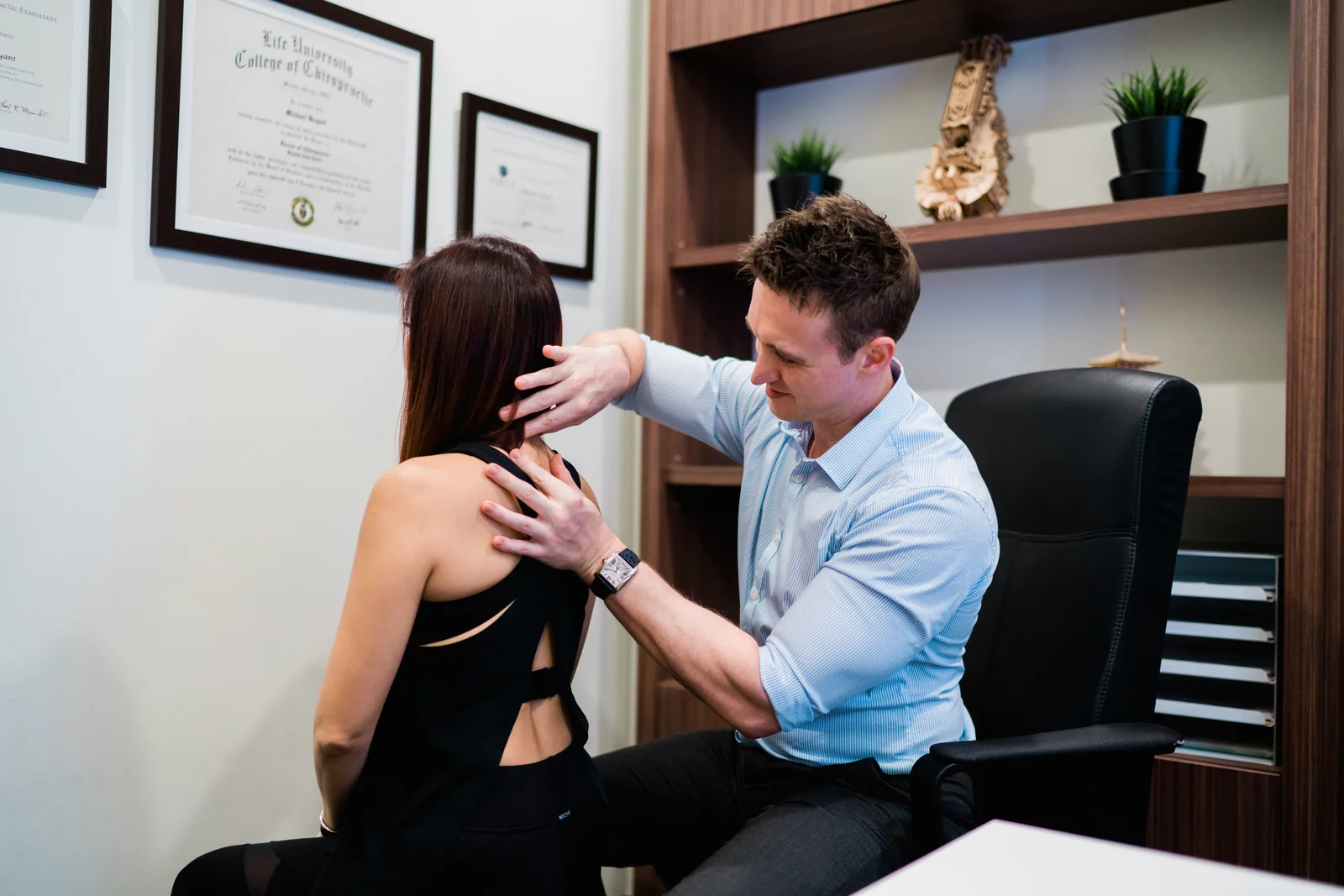
Shoulder pain that is not just a shoulder problem.
Rotator cuff, impingement, biceps tendinopathy — usually presenting alongside compensations in the neck and thoracic spine. We treat the connected kinetic chain, not just the painful joint.
First visit$88 · 60 min · assessment and treatment
Typical durationMost shoulder conditions respond within 8–12 sessions.
Treatment typeNon-surgical, drug-free
Shoulder pain has many possible causes — rotator cuff strain or tear, impingement, biceps tendinopathy, AC joint dysfunction, and pain referred from the cervical spine. Because these present similarly, the right treatment depends on first identifying which structures are actually involved.
Reviewed by Dr. Michael Bryant, Doctor of Chiropractic · Elite Spine Centres
Self-check
Recognise these symptoms?
Pain on reaching overhead or behind the back
Pain on sleeping on the affected side
Weakness or fatigue with lifting
Clicking, catching, or limited range of motion
If three or more sound familiar, a 60-minute first visit — assessment and treatment with a doctor — will tell you what is producing them, and whether our care is the right path for your condition.
Shoulder pain has many causes — rotator cuff strain or tear, shoulder impingement, biceps tendinopathy, AC joint dysfunction, and referred pain from the cervical spine. The right treatment depends on identifying which structures are involved.
Our treatment approach
We assess the shoulder as part of a connected kinetic chain — including the cervical spine, scapula, and thoracic spine — and design treatment around the actual pain generator. Most non-surgical shoulder pain responds to a combination of manual therapy, targeted therapeutic technology, and progressive rehabilitative exercise.
Modalities used
Shoulder manual therapy
Radial shockwave therapy
Low-level laser therapy
Rehabilitative exercise
Postural correction
What to expect
Most shoulder conditions respond within 8–12 sessions. Tendinopathies and post-injury cases may require a longer rehabilitation phase to fully restore function.
When shoulder pain needs a surgical opinion
Most rotator cuff and shoulder pain responds well to non-surgical care. A minority of cases — typically a full-thickness rotator cuff tear — do not, and are better served by an orthopaedic surgical assessment. Signs this may apply to you: sudden pain onset from a specific injury or fall, significant weakness or inability to lift the arm away from the body, or no meaningful improvement after a genuine course of conservative treatment. We will tell you directly if your presentation looks like one of these, and refer you to an orthopaedic specialist rather than continue treatment that isn’t the right fit.
If this matches your symptoms
Most cases of shoulder pain are non-surgical when treated with the right protocol.
Every patient begins with a 60-minute first visit — a full assessment and first treatment with a doctor, for $88 online.
If our care is not the right path for your condition, we will say so and refer you on.
Our patient-care team is happy to walk through anything else over the phone or WhatsApp.
In most cases, yes. Conservative treatment for shoulder pain resolves the condition for the majority of patients without surgery. We will tell you honestly if your case is one where surgical consultation is the right path.
No referral is required. If you have prior imaging — X-ray, MRI, specialist correspondence — bringing it to the first consultation helps the clinician build a more complete picture from the start.
Most shoulder conditions respond within 8–12 sessions. Tendinopathies and post-injury cases may require a longer rehabilitation phase to fully restore function.
Doctor of Chiropractic (USA) · Founder of Elite Spine Centres · Developer of the Functional Correction Method
Dr. Bryant leads the clinic's doctor-led multidisciplinary practice and reviews the clinical information on this page for accuracy.
Book your first visit
Speak to a clinician about what is causing your pain.
Your first visit is a 60-minute session with a doctor — a full assessment and your first treatment in the same appointment. We take your clinical history, screen your posture and movement, explain what we find in plain language, and begin treatment if your condition is suitable for our care.