
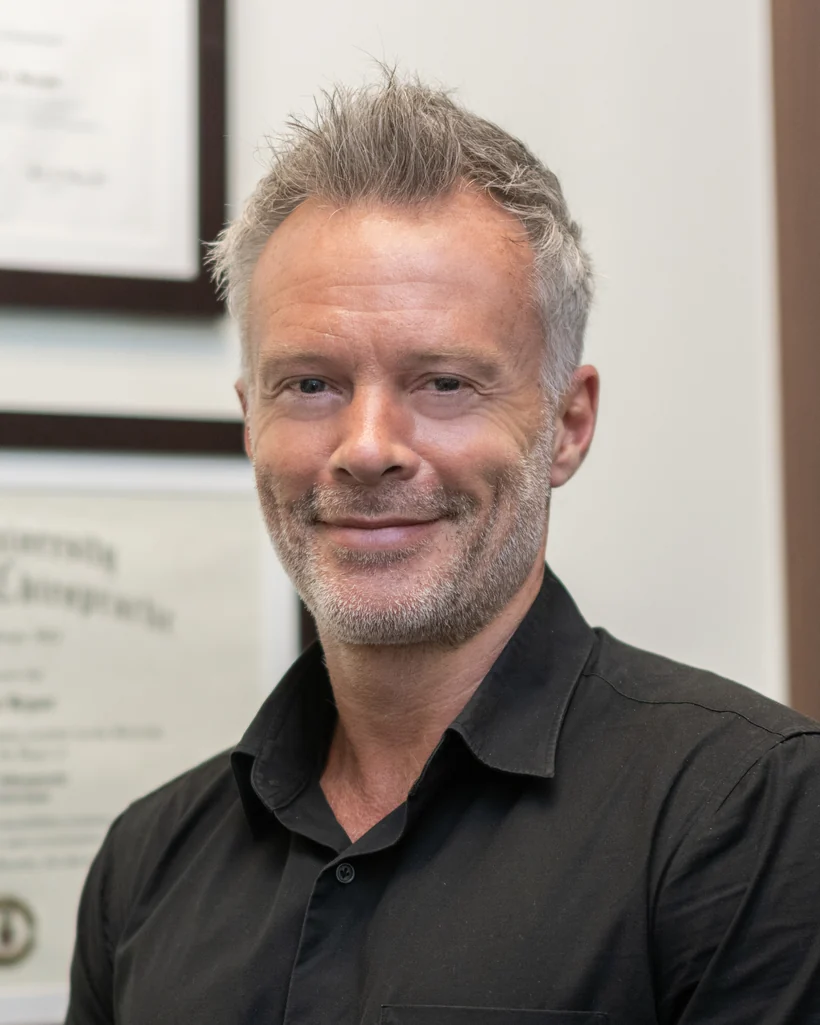
Dr. Marcus Bernini
Doctor of Osteopathy trained at the London School of Osteopathy. Former professional rugby player. Brings whole-system manual therapy and a deep practical understanding of sport-related musculoskeletal injury to the Elite Spine Centres team.
Background
Dr. Marcus Bernini qualified at the London School of Osteopathy in 2007, having previously played rugby at a professional level. His background gives him an unusual combination — the clinical training of a Doctor of Osteopathy alongside the practical experience of a body that has been through high-load sport, injury, and recovery firsthand.
Clinical philosophy
Dr. Bernini's approach is rooted in classical osteopathic principles: the body is treated as a connected whole, not as a collection of independent regions. A shoulder problem is rarely just a shoulder problem. A lower-back episode often has a contributor higher up — or lower down — the kinetic chain. The osteopathic assessment finds those connections; the treatment addresses them.
His practice integrates joint mobilisation, soft tissue work, myofascial release, and visceral techniques where indicated. Every session begins with a reassessment — the body changes between sessions, and the treatment adapts.
Conditions and modalities
Dr. Bernini primarily treats sports-related injury, complex multi-region pain presentations, patients in the recovery phase from operations or trauma, and chronic musculoskeletal cases that have not responded to single-region treatment. He delivers osteopathic manual therapy, myofascial release, and the manual-therapy components of FCM.
In his patients' own words
Been attending sessions with Dr. Marcus for over a three-month period for lumbar and leg pains. So far it has been good feeling improvements with the guides given as well. Would recommend Dr. Marcus if you are able to visit this clinic.
Speak to a clinician about what is causing your pain.
Your first visit is a 60-minute session with a doctor — a full assessment and your first treatment in the same appointment. We take your clinical history, screen your posture and movement, explain what we find in plain language, and begin treatment if your condition is suitable for our care.