
A signature multidisciplinary protocol — designed for sustainable correction, not short-term pain relief.
Developed by Dr. Michael Bryant, the Functional Correction Method (FCM) combines five components into a single integrated treatment plan, delivered under one roof, by a doctor-led clinical team.
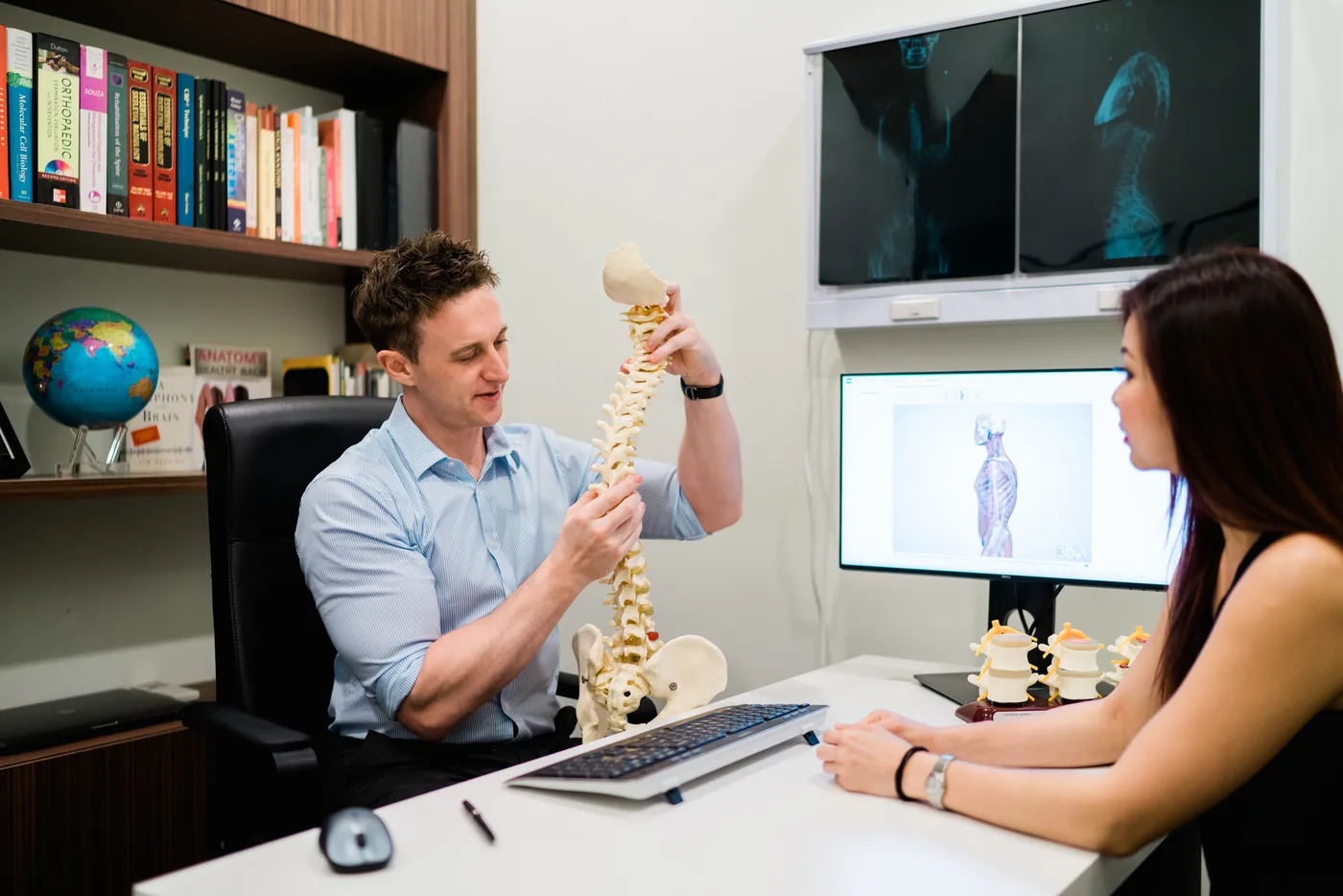
Not stacked. Sequenced.
FCM is not a checklist of five separate treatments. Each component is calibrated to the individual case and applied in the order — and at the intensity — that the clinical findings indicate.
Modern chiropractic
Precise spinal adjustments, soft tissue mobilisation, and joint manipulation calibrated to the individual presentation — not a template.
Osteopathy
Whole-system manual therapy from a London-trained doctor of osteopathy. Reads the body as connected, not as isolated regions.
Therapeutic technology
Spinal decompression, low-level laser therapy, radial shockwave, and the super inductive system — applied where the clinical evidence supports them.
Rehabilitative exercise
A structured exercise programme designed to rebuild the movement patterns that produced the pain. Done in clinic, then taken home.
Lifestyle coaching
Ergonomics, sleep posture, work setup, daily movement — the small variables that determine whether structural correction holds.
Why FCM exists
Most musculoskeletal pain is multi-factorial. A slipped disc rarely presents in isolation — there is almost always a postural pattern that produced it, a muscular compensation that maintains it, and a movement habit that risks recurrence. Treating one factor in isolation tends to produce short-term relief, not sustained correction.
FCM was developed to address this directly. It combines the modalities that are individually well-evidenced — chiropractic, osteopathy, therapeutic technology, rehabilitative exercise, and lifestyle coaching — into a single sequenced plan, designed for the patient as they actually present.
How a typical FCM plan unfolds
An FCM treatment arc has three phases. The proportions vary by patient, but the structure is consistent.
Phase one — pain reduction and structural correction
The early weeks focus on reducing the acute symptoms and addressing the structural drivers — disc, joint, or muscular. Manual therapy and therapeutic technology carry most of the load in this phase. Sessions are typically twice-weekly.
Phase two — rebuilding function
Once the acute pain is reduced, the emphasis shifts to rebuilding the underlying movement patterns and strength that prevent recurrence. Rehabilitative exercise takes a larger role. Manual therapy frequency reduces. Sessions move to weekly.
Phase three — integration and maintenance
The final phase integrates the structural correction into daily life. Lifestyle coaching — ergonomics, sleep, occupational mechanics — becomes the focus, alongside maintenance care to consolidate gains. Frequency drops to fortnightly or monthly.
What FCM is not
FCM is not a generic wellness package. It is not a fixed protocol applied uniformly to every patient. It is not delivered on a non-clinical schedule — every session begins with a reassessment, and the plan adapts to the response.
If, at any stage of the assessment, we conclude that FCM is not the right path for your condition, we will say so. Some cases require surgical consultation; others are better served by single-modality treatment. The plan is built around the clinical findings, not around the method.
Common questions.
Our patient-care team is happy to walk through anything else over the phone or WhatsApp.
Dr. Michael Bryant
Doctor of Chiropractic (USA) · Founder of Elite Spine Centres · Developer of the Functional Correction Method
Dr. Bryant leads the clinic's doctor-led multidisciplinary practice and reviews the clinical information on this page for accuracy.
Speak to a clinician about what is causing your pain.
Your first visit is a 60-minute session with a doctor — a full assessment and your first treatment in the same appointment. We take your clinical history, screen your posture and movement, explain what we find in plain language, and begin treatment if your condition is suitable for our care.