
Myofascial release — the missing piece in long-standing musculoskeletal cases.
Sustained, calibrated soft-tissue work targeting the fascia — the connective tissue that often holds chronic tension after the structural correction has already happened. Firmer and more specific than a massage.
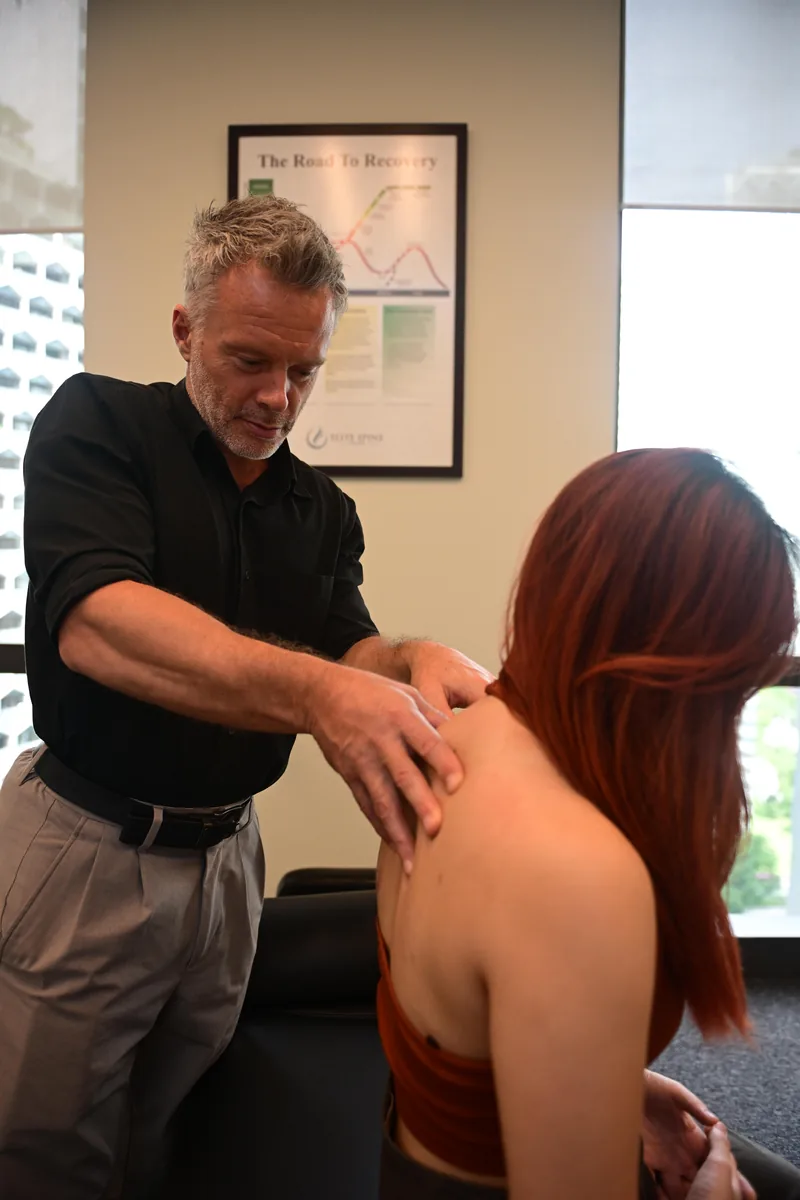
What it is
Myofascial release is a manual therapy technique that targets the fascia — the connective tissue surrounding muscles, joints, and organs. Restricted fascia produces chronic tension, limited range of motion, and pain that recurs even after structural correction. Releasing it is often the missing piece in long-standing musculoskeletal cases.
How it works
Treatment involves sustained, calibrated manual pressure across the affected fascial planes. It is firmer than a massage but precisely targeted and far more clinically specific.
Who it is for
- Chronic muscular tension and trigger points
- Postural pain that resists postural correction alone
- Post-injury scar tissue
- Sports recovery
- TMJ and jaw tension (referred)
Contraindications + honest screening
Active acute injury, areas of acute inflammation, infection, or recent surgery. Treatment timing is staged with your clinical recovery.
What a session looks like
Each session is 30–60 minutes, depending on the area treated and the depth of the work required.
Typical treatment arc
Typically used throughout the active treatment phase, frequency adjusted to clinical need.
Where this service fits
- Myofascial release is one component of the broader Functional Correction Method — used in isolation only where a multi-modal plan is not clinically indicated.
- Each session is preceded by a brief reassessment so the treatment evolves with the patient.
- If this modality is not the right fit for your condition, we will say so at the first consultation.
Common questions.
Our patient-care team is happy to walk through anything else over the phone or WhatsApp.
While both involve hands-on treatment, they work differently. A regular massage typically uses rhythmic or flowing movements to relax muscles. Myofascial release uses slow, sustained pressure held for 90 seconds or more to gently stretch and release restrictions within the fascia itself. The goal is to address the connective tissue that surrounds and supports the muscles, rather than the muscles alone.
This depends on the nature and severity of your fascial restrictions. Some patients notice significant improvement after just one or two sessions, particularly for acute issues. Chronic or long-standing restrictions typically respond better to a series of sessions. Your practitioner will adv ise on the most appropriate course of treatment following your initial assessment.
Myofascial release should not be painful. You may feel a mild sensation of pressure or slight tenderness in restricted areas, but the technique is deliberately gentle and non-forceful. If you experience any discomfort during a session, your practitioner will adjust the pressure immediately. Many patients describe the experience as deeply relaxing.
Yes, and the combination is often more effective than either therapy alone. Chiropractic care focuses on restoring spinal alignment and joint function, while myofascial release addresses the connective tissues and muscles that support those structures. At Elite Spine Centres, both are frequently incorporated into a single, integrated treatment plan.
Dr. Michael Bryant
Doctor of Chiropractic (USA) · Founder of Elite Spine Centres · Developer of the Functional Correction Method
Dr. Bryant leads the clinic's doctor-led multidisciplinary practice and reviews the clinical information on this page for accuracy.
Speak to a clinician about what is causing your pain.
Your first visit is a 60-minute session with a doctor — a full assessment and your first treatment in the same appointment. We take your clinical history, screen your posture and movement, explain what we find in plain language, and begin treatment if your condition is suitable for our care.