
Super inductive system — reaching pain that surface treatments cannot.
High-intensity electromagnetic-field therapy that penetrates deeper than manual or surface modalities. Particularly effective for deep joint pain, post-fracture rehabilitation, and chronic muscular dysfunction.
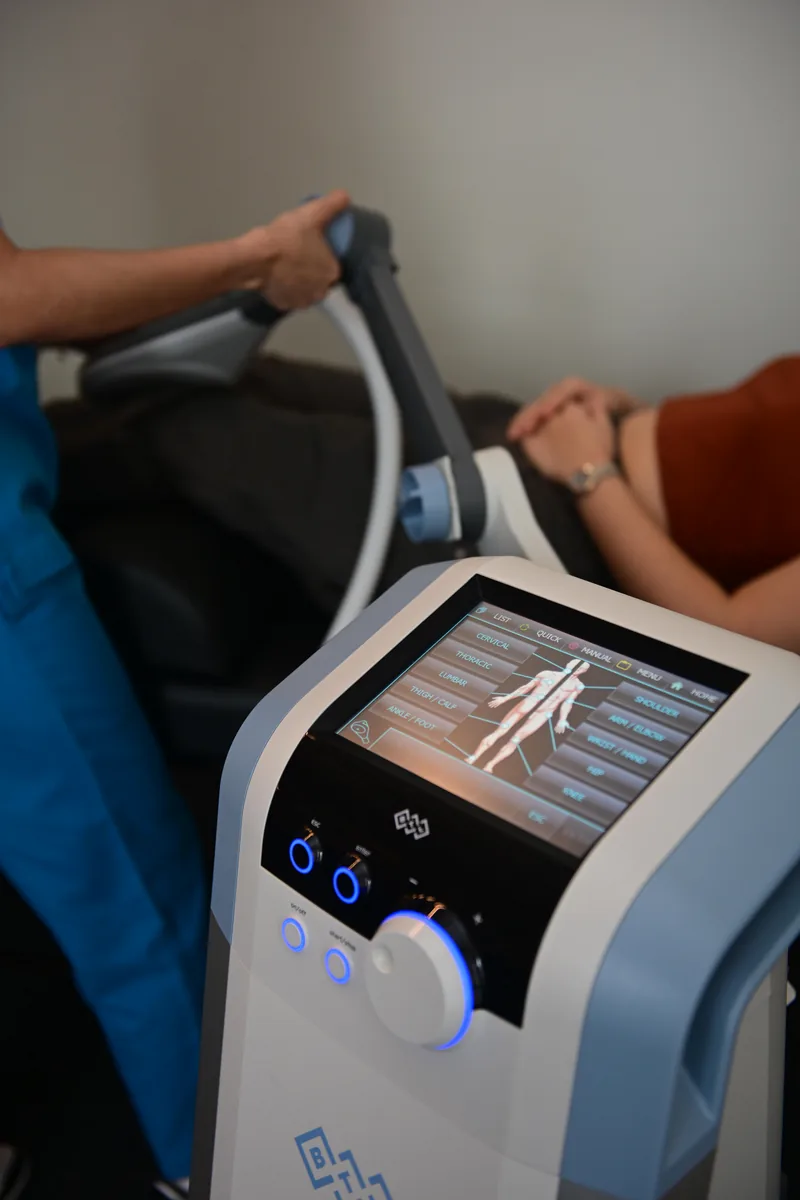
What it is
The super inductive system (SIS) uses a high-intensity, focused electromagnetic field to penetrate deep into musculoskeletal tissue. It is particularly effective for pain that originates below the surface of the body — deep joint pain, post-fracture rehabilitation, and chronic muscular dysfunction.
How it works
The treatment is contactless. A coil inside the applicator generates a focused electromagnetic field — up to 150 Hz frequency and up to 3 Tesla intensity — positioned over the treatment area. The field causes depolarisation of neuromuscular tissue, producing involuntary muscle contraction and a deep, rhythmic pulsing sensation. There is no skin contact, no heat, and no medication involved. It is comfortable and requires no preparation. For a fuller explanation of the science, read how the super inductive system works.
Who it is for
- Deep joint pain (hip, shoulder, sacroiliac)
- Post-fracture rehabilitation
- Chronic muscular dysfunction
- Spinal pain that has not fully responded to surface-level treatment
Contraindications + honest screening
Patients with implanted cardiac devices (pacemaker, defibrillator), implanted neurostimulators, or active malignancy in the treatment area. We screen at the first consultation.
What a session looks like
Each session takes 15–20 minutes. Used in combination with manual therapy and rehabilitation as part of a broader treatment plan that may also include laser therapy.
Typical treatment arc
6–12 sessions over the active treatment phase.
Where this service fits
- Super inductive system is one component of the broader Functional Correction Method — used in isolation only where a multi-modal plan is not clinically indicated.
- Each session is preceded by a brief reassessment so the treatment evolves with the patient.
- If this modality is not the right fit for your condition, we will say so at the first consultation.
Common questions.
Our patient-care team is happy to walk through anything else over the phone or WhatsApp.
Dr. Michael Bryant
Doctor of Chiropractic (USA) · Founder of Elite Spine Centres · Developer of the Functional Correction Method
Dr. Bryant leads the clinic's doctor-led multidisciplinary practice and reviews the clinical information on this page for accuracy.
Speak to a clinician about what is causing your pain.
Your first visit is a 60-minute session with a doctor — a full assessment and your first treatment in the same appointment. We take your clinical history, screen your posture and movement, explain what we find in plain language, and begin treatment if your condition is suitable for our care.